PROJECT
Woodfill Vases — Form & Texture
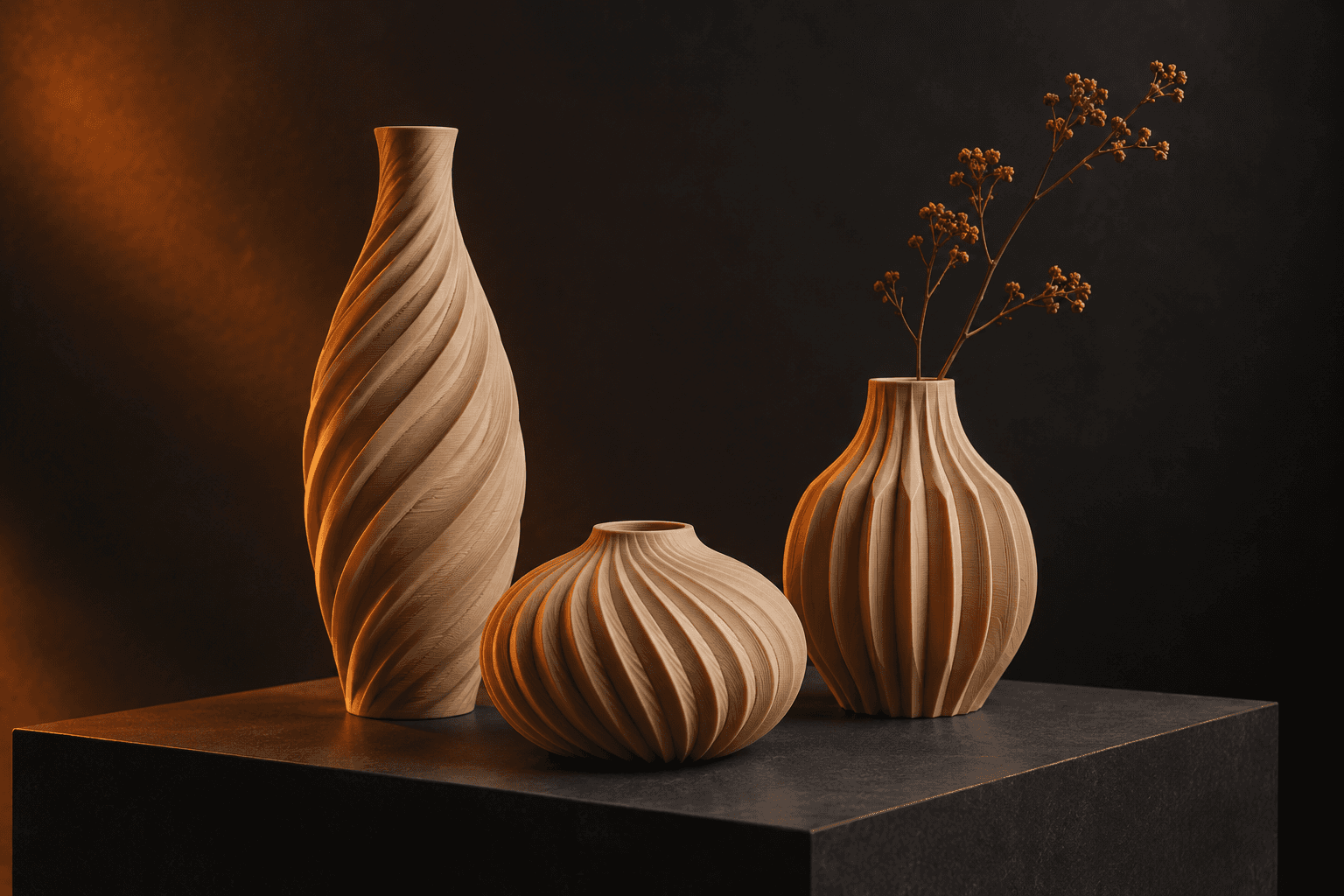
3D printed woodfill vase exploring natural form, texture, and warm interior aesthetics.
CLIENT
Mathiass F.
ROLE
Object Design / 3D Print
STACK
Blender / Bambu Studio
DURATION
1 month

Woodfill Vases – Form & Texture
Digital precision. A warmer object.
This 3D-printing study explores how natural colour, surface texture, and sculptural form can bring warmth and character into an interior environment.
01 / The Idea
The goal was to explore decorative vessels that feel considered as objects, whether displayed individually or grouped as a collection.
The main focus was on:
proportion
rhythm
silhouette
surface detail
the way light moves across textured geometry
The idea was not simply to make a vase, but to create an object with its own presence in a space.
02 / Form & Material
Soft curves and repeated ribs create a balance between organic form and digital production.
The wood-toned filament softens the technical character of 3D printing and gives the objects a warmer, more tactile visual quality.
The design language is built around:
clean silhouettes
repeated surface patterns
natural tones
controlled curvature
visible material texture
The result feels digitally precise, but visually much more natural and inviting.
03 / Workflow Study
The project brings together form development in Blender, print preparation in Bambu Studio, and final visual presentation.
The process followed a simple refinement loop:
Define the silhouette
Adjust proportions and dimensions
Produce a small physical test
Evaluate the result
Refine the next version
This workflow made it possible to develop the design not only on screen, but through the physical behaviour of the printed object.
04 / The Presentation
The presentation explores a family of related forms at different heights and proportions.
A dark environment and warm side lighting were used to make the surface texture easier to read while keeping the objects at the centre of the composition.
The presentation focuses on:
surface structure
light and shadow
differences in height and proportion
visual consistency across the collection
Each piece keeps its own character while still feeling like part of the same family.
The Detail That Matters
Layer lines do not always need to be hidden.
They can become part of the object’s character.
Rather than treating the production process as something to disguise, this study uses the printed texture as an intentional visual element.
That detail helps the object feel more honest, tactile, and connected to the way it was made.
Presentation Note
This portfolio presentation explores a proposed direction based on the original woodfill vase project.
The new visual is a concept visualisation and does not represent a photograph of completed physical prints.
The vessels are presented as dry decorative objects, intended for interior display rather than functional use with water.